
Gurgling toilets, slow drains, and sewage odors point to a problem in the pipe running under your yard. Most homeowners assume fixing that means an excavator across the lawn, and for decades it did. Sewer line work today can often be done through small access points instead.
Homeowners in Eastern Massachusetts frequently put off sewer repairs specifically to avoid the property damage. This guide covers how pipe lining and pipe bursting work, what the timeline looks like, and why a camera evaluation comes first.
How Modern Trenchless Sewer Line Repair Works
Traditional sewer repair means digging a trench along the full length of the pipe. Trenchless methods work through small access points instead, using existing cleanouts or small entry pits at each end of the run. That keeps driveways, walkways, and landscaping intact.
Cured-in-Place Pipe Lining (CIPP)
Cured-in-place lining installs a new pipe inside the damaged one. Technicians first clean the interior with hydro jetting to clear grease, scale, and roots. They then insert an epoxy-saturated felt liner through the damaged pipe and inflate an internal bladder to hold it against the pipe wall while it cures. The resin hardens within hours into a jointless, smooth pipe with no seams for tree roots to find.
Pipe Bursting for Trenchless Sewer Line Replacement
Some pipes have collapsed sections, missing lengths, or fractures too severe for lining to reinforce. In those cases, trenchless sewer line replacement through pipe bursting is the better option. A hardened bursting head is connected to a new high-density polyethylene pipe, and a hydraulic winch pulls the head through the damaged line. The head fractures the old cast iron or clay pipe outward into the surrounding soil while the new pipe follows directly behind it, restoring full capacity without an open trench.
Disruption, Project Timelines, and Pipe Longevity
Property disruption is the part homeowners dread most. Excavators leave dirt mounds, ruin turf, and block driveway access for days. Most trenchless projects wrap up in one or two days, which lets your household get back to normal plumbing use quickly. Keeping the work confined to small access pits also protects street access and the features around your house.
Avoiding Landscape Restoration Work
Open trenching creates a second project after the plumbing is finished. Homeowners end up hiring separate contractors to repave driveways, pour concrete walks, and replant grass and shrubs. Trenchless work leaves the ground largely intact, so that follow-on expense and delay mostly disappear.
Reducing Recurring Root Intrusion
Clay and cast iron sewer pipes have mechanical joints every few feet. As soil shifts, those seams separate and give tree roots an entry point. Chemical treatments and drain snaking only buy time, because the openings are still there. A lined or replaced pipe has no joints along the run, which removes the pathway roots have been using.
Why a Sewer Camera Inspection Is the Essential First Step
You cannot choose a repair method without knowing what the pipe actually looks like. A sewer camera inspection shows pipe depth, slope, alignment, and structural condition without digging. Technicians push a high-resolution waterproof camera in through the cleanout and send live video to a monitor.
Confirming Candidates for Trenchless Repair
Not every broken sewer pipe is a candidate. Pipes with major grade failures, severe back pitch, or complete ground collapse still need standard excavation. The inspection is what determines whether cured-in-place lining, pipe bursting, or an isolated spot repair is the right call. You can watch the footage yourself and see the same thing the technician sees.
Pinpointing Obstructions with Video
Video also reveals blockages before any repair begins. Heavy scale, dropped joints, disconnected laterals, and roots all show up clearly. If debris is obstructing the pipe, our team performs drain clearing to prepare the interior surface first, since an epoxy liner needs a clean wall to bond to.
Modern Solutions for Lasting Underground Plumbing Protection
A sewer lateral problem no longer means a torn-up yard and weeks of restoration work. Trenchless repair restores underground piping from the inside, which protects your property and addresses the recurring backups that brought you to the problem in the first place.
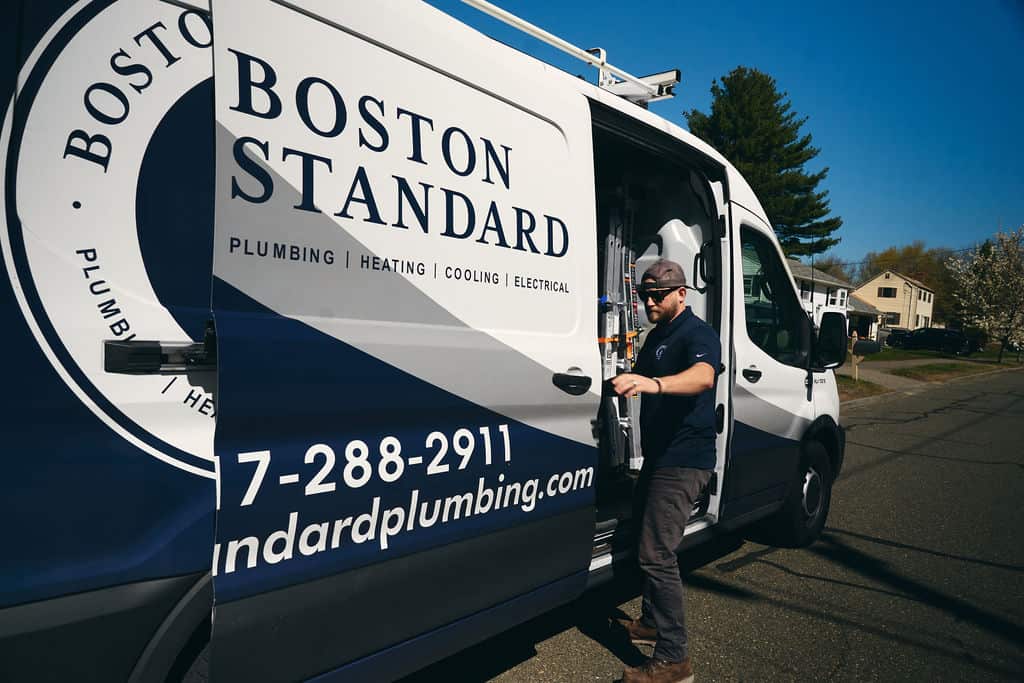
Schedule a Sewer Camera Inspection with Boston Standard
If your home has recurring clogs, gurgling toilets, or sewer odors, look at the pipe before committing to any major repair. Boston Standard provides video evaluations that show whether trenchless sewer line repair is a fit for your home. Contact our licensed team to arrange an inspection and get clear, practical recommendations.