
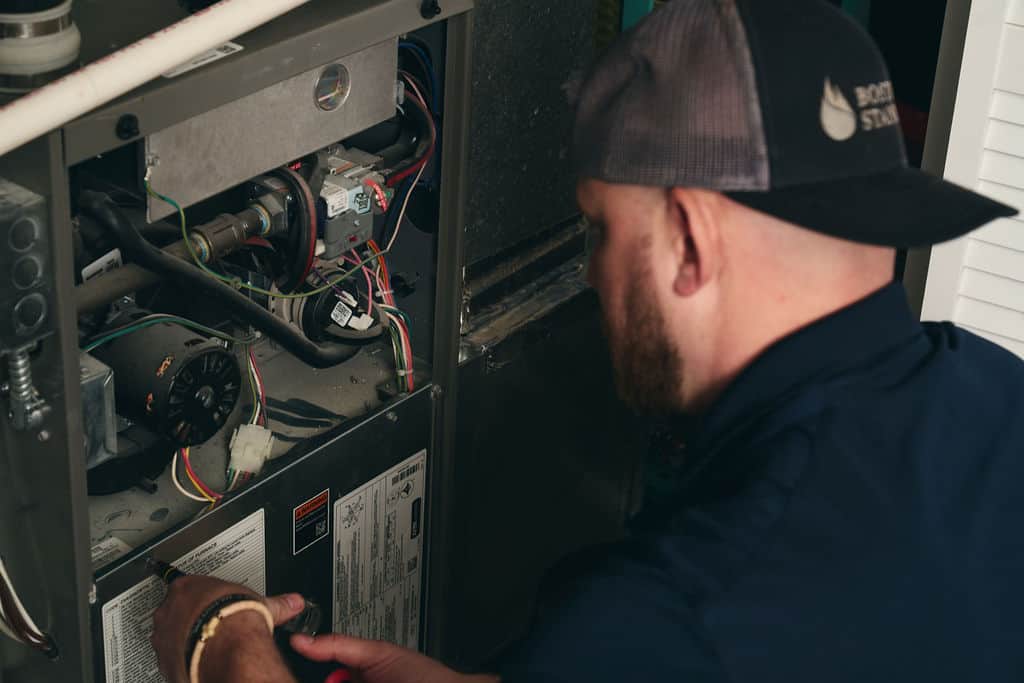
New England autumns shift quickly from mild afternoons to freezing nights. When temperatures drop across Eastern Massachusetts, heating equipment faces its first real test of the year. Getting ahead of it in September or October is far easier than dealing with a no-heat call in January. This furnace tune-up checklist covers what you can check yourself and what a technician needs to handle.
What You Can Check Before Calling a Technician
Several maintenance items are well within reach for a homeowner. Working through them helps you spot problems early and improves how efficiently your furnace runs once you fire it up.
1. Replace the Air Filter
A clean filter keeps dust off internal parts and lets air move freely through your ductwork. A dirty one forces the blower motor to work against restricted airflow. Check the filter size printed on the frame, then replace any dirty fiberglass or pleated filter before you turn on the heat.
2. Test the Thermostat and Replace Batteries
Thermostats sit untouched through mild late-summer weather, so test yours before you need it. Switch to heat mode and set the temperature five degrees above the current room reading. Listen for the click as the relay engages, then confirm warm air reaches the registers within a few minutes. If your thermostat runs on batteries, put in a fresh set now rather than discovering the problem on a cold night.
3. Clear Supply Vents and Exterior Flues
Walk the house and check that rugs, furniture, and drapes are not covering supply vents or return grilles. Blocked vents restrict return air and throw off duct pressure. If you have a modern high-efficiency unit, go outside and check the PVC exhaust pipes for leaves, dirt, or animal nests blocking combustion airflow.
4. Inspect the Pilot Light or Ignition
Older furnaces run a continuous pilot light; newer ones use electronic igniters. Look through the pilot view window and check the flame color. Steady blue means combustion is working as it should. A flickering yellow flame points to a combustion problem and needs service before you rely on the unit. If an electronic igniter clicks repeatedly without catching, the furnace will shut itself down on a safety lockout.
What a Technician Checks That You Cannot
A homeowner walkthrough is a solid start, but the parts that matter most for safety need specialized tools. A professional furnace tune-up checklist covers fuel lines, electrical connections, and safety switches, and confirms each one is operating within the manufacturer’s stated limits.
Heat Exchanger and Safety Switch Verification
The heat exchanger is what keeps flue gases out of the air you breathe. Metal fatigue and age can open small cracks in the chamber walls, which is why this check is not optional. Technicians test heat exchanger integrity with digital combustion analyzers and inspection cameras. They also verify that high-limit switches and flame rollout sensors will cut fuel flow if chamber temperatures climb past safe limits.
Burner Assembly and Blower Cleaning
Carbon soot and dust collect on burner assemblies over a summer of downtime, and that buildup causes delayed ignition and wastes fuel. Technicians clean the burner ports to restore an even flame pattern. They also clean the blower wheel blades, since dirt on the blades slows air speed and raises the motor’s amp draw. Cleaning the wheel brings static pressure and airflow back to where they should be.
Deciding Between a Tune-Up and Replacement
Annual maintenance extends equipment life, but a tune-up cannot solve every problem. If your furnace is 15 to 20 years old and needs service calls every season, it may be reaching the end of its useful run. A cracked heat exchanger or a failed blower motor usually points toward replacement rather than another repair. A tune-up gets the most out of the parts you have; a new unit gives you current reliability and burns less fuel to produce the same heat.
Cold-Weather Electrical Demands and Home Safety
Heating a house takes more than fuel. Gas furnaces depend on continuous electricity to run draft inducers, ignition controls, circuit boards, and blower motors. As temperatures drop, your furnace runs longer cycles and pulls more power over the course of a day.
Supplemental Space Heaters and Circuit Loads
Drafty windows and cold exterior walls send most people looking for a portable space heater. Those draw heavy continuous current from a standard wall outlet, and running one on a circuit shared with lights or electronics will trip the breaker. Older homes across Greater Boston often have limited service capacity to begin with, which makes overloads more likely when supplemental heat runs alongside the furnace.
The Role of an Electrical Safety Inspection
Fall is a good time to look at your electrical system before winter demand climbs. An electrical safety inspection checks the main panel for loose terminals, signs of heat wear, and correctly sized breakers. A licensed electrician will also confirm your heating system runs on its own dedicated branch circuit, which is what keeps a space heater from taking your furnace offline.
Preparing Your Home for Winter Reliability
Working through a furnace tune-up checklist each fall keeps your heating system ready for the weather ahead. The homeowner tasks- filters, grilles, and thermostat batteries- take an afternoon. The professional side covers the combustion and safety checks that require instruments. Booking seasonal maintenance early means you are not competing for a slot after the first hard freeze.
Schedule Your Seasonal Service with Boston Standard
The licensed team at Boston Standard handles heating maintenance and electrical inspections across Boston and the surrounding communities, with upfront pricing and a detailed report of what we find. Contact Boston Standard today to schedule your pre-winter furnace tune-up and home electrical inspection.