
You hear the burners ignite. The blower starts pushing warm air through the vents. Then everything clicks off after two or three minutes, and a moment later the unit runs the same sequence again. The rooms stay cold. If you are standing by a register asking yourself, “Why does my furnace keep turning off?“, you are watching furnace short cycling.
A heating system in normal operation runs steady cycles long enough to distribute heat through the house before the burner shuts down. When a furnace keeps shutting off early, it is usually responding to a safety sensor or to a temperature reading that does not reflect the room. Knowing which one you are dealing with tells you whether this is something you can fix tonight.
Two Things You Can Check Tonight
Two common causes can be inspected without opening a mechanical cabinet or touching any wiring.
Airflow Restrictions
A clogged furnace filter is one of the most common causes of short cycling. As dust, pet hair, and debris build up on the filter surface, the blower cannot draw enough return air across the heat exchanger, and cabinet temperatures climb to the point where a safety switch intervenes.
Check the filter and slide in a clean replacement, which restores airflow and lets the unit release heat safely. Then walk the house and confirm supply registers and large return grilles are not blocked by furniture, rugs, or drapes.
Thermostat Placement and Settings
Poor thermostat placement can shut a furnace down prematurely. A thermostat in direct sunlight, directly above a register, or near warm kitchen appliances reads localized heat rather than room temperature. That false reading stops the unit early, and it restarts once the warm pocket clears.
Check that the thermostat screen is active, set the fan switch to auto rather than on, and install fresh batteries before looking at anything mechanical.
Faults That Need a Technician
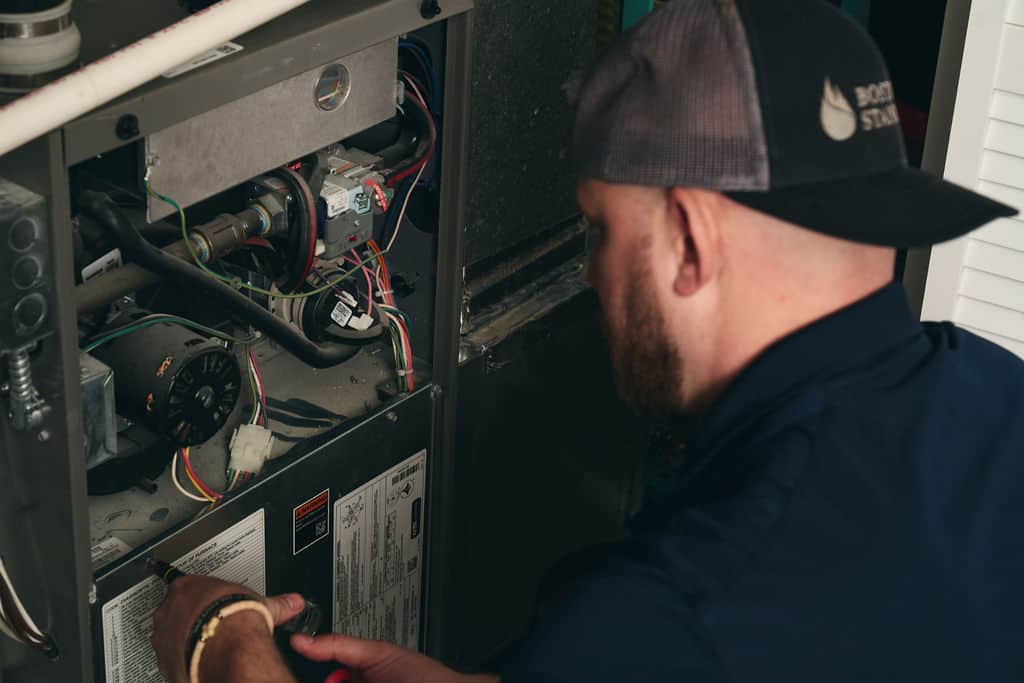
If the filter is clean and the wall control is working, the problem is inside the unit. Most modern furnaces have a diagnostic LED on the control board that flashes a trouble code, and the chart on the inside of the cabinet door tells you what the blink pattern means.
The Flame Sensor and Ignition Sequence
A dirty flame sensor triggers sudden shutdowns regularly. The sensor is a thin metal rod that sits in the burner flame to confirm ignition. Oxidation coats the rod over time, which stops it from detecting the small electrical current the flame generates. If the control board does not sense a flame within a few seconds, it closes the gas valve. Cleaning or replacing the sensor during furnace service restores normal operation.
High Limit Switch Shutdowns
The high limit switch monitors cabinet temperature. If restricted ductwork, a failing blower motor, or a fouled heat exchanger drives temperatures up, the switch cuts fuel to the burners while running the blower to cool the equipment. Repeated tripping means the switch is doing its job and protecting your heat exchanger from cracking. Never bypass or reset a limit switch to keep the unit running, since continuing to restart it can void your parts warranty and create a real safety hazard.
When the Furnace Is Simply Too Large
Sometimes short cycling has nothing to do with a dirty filter or a failed sensor. The unit is physically oversized for the space, and no amount of maintenance changes that.
How Oversizing Produces the Pattern
An oversized furnace dumps heat into the rooms faster than it can spread. The area near the thermostat warms almost immediately and satisfies the setpoint before the exterior rooms catch up, so the furnace shuts off. Indoor temperatures then drop quickly, which triggers another brief cycle. That loop repeats all winter.
Why Sizing Has to Be Calculated
Correct sizing comes from a formal heating load calculation rather than a rule of thumb or a match to the old unit. The calculation accounts for local climate conditions, square footage, wall insulation levels, and window efficiency, and it produces the heat loss profile the equipment has to meet. Sizing off square footage alone is how homes end up with equipment that short cycles from the day it is installed.
Why Short Cycling Needs Prompt Attention
Rapid cycling costs more than comfort. Every ignition cycle puts mechanical stress on the hot surface igniter, inducer motor, and blower motor, and starting and stopping dozens of times an hour accelerates that wear considerably.
Frequent cycling also drives thermal expansion and contraction across the heat exchanger, which over time risks cracking it and voiding the manufacturer’s warranty. A unit shutting off every few minutes is often leaning on its high-temperature limit switches to avoid overheating, which is not a state it should be running in. Addressing the underlying cause protects the equipment and the household.
Schedule Professional Heating Service
If a clean filter and a thermostat check do not resolve it, our licensed technicians can inspect the system. We provide upfront pricing and thorough diagnostics, and we determine whether an electrical sensor, an airflow restriction, or an equipment sizing issue is behind the cycling.
Dealing with a sensor fault now is considerably simpler than replacing a cracked heat exchanger later. Book your heating maintenance and repair appointment with Boston Standard, or review our boiler services if your home runs on hydronic heat.