
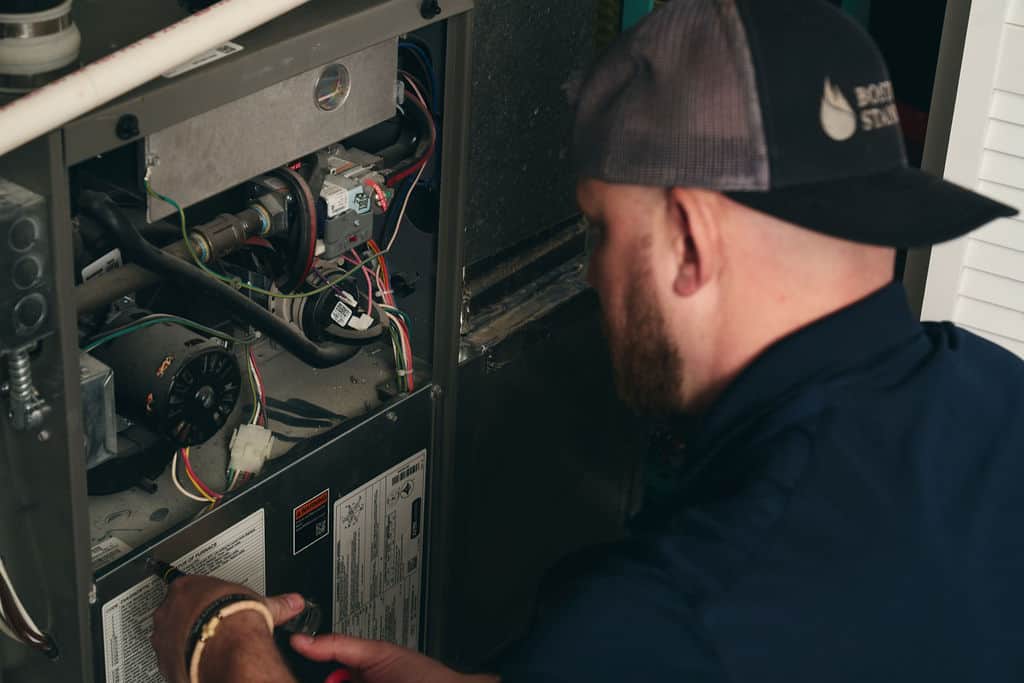
Finding a puddle on the basement floor next to your heating system is unsettling. If you notice your boiler leaking water, where the water starts tells you more than how much of it there is. Water collecting around the base of a boiler can come from a routine pressure change, a worn component, or a problem inside the boiler itself. Rather than treating every puddle as a failed system, tracing the source gives you a clear picture of what is happening and what kind of repair to expect.
Heating systems that use boilers circulate hot water or steam through a closed loop under controlled pressure. When a leak occurs, the equipment is signaling that a seal has failed, system pressure has shifted, or internal metal has degraded over time. Understanding the distinction between routine component wear and major structural damage helps you make informed decisions when scheduling boiler heating services. Before you touch any valves or reach for tools, take a careful look at the system so you can share clear observations with a technician.
Pressure Issues and the Safety Relief Valve
Boiler Pressure Relief Valve Leaking: Understanding the Cause
Every residential boiler has a safety device called a pressure relief valve, usually with a discharge pipe pointing down toward the floor. When you see a boiler pressure relief valve leaking, it is natural to assume the valve has failed. This valve is engineered to open automatically when system pressure rises above a safe level. Valves can wear out or collect mineral buildup, but a discharging valve is usually doing its job. It releases water to protect the boiler from dangerous overpressure. Replacing the valve without finding out why the pressure climbed will not fix the problem, because the new valve will likely discharge too.
Waterlogged Expansion Tanks and Spiking System Pressure
The underlying cause of high pressure frequently traces back to the expansion tank. Hydronic systems use an expansion tank to absorb the extra volume water takes up as it heats. Modern diaphragm tanks contain a flexible rubber bladder separating system water from a sealed cushion of air. When that bladder fails or loses its air charge, water fills the tank and it becomes waterlogged. Because water cannot be compressed, thermal expansion causes system pressure to rise sharply during firing cycles. If you find water around the relief valve pipe, a waterlogged expansion tank is often the real cause.
Mechanical Leaks Around Fittings and Circulators
Circulator Pump Flanges and Mechanical Seals
Circulator pumps drive hot water through the supply and return piping loops of your home. These pumps rely on shaft seals and flange gaskets to keep water contained while the impeller turns. Over years of operation, friction, heat, and vibration wear these seals down. When pump seals fail, moisture begins dripping from the flange bolts or gathering around the lower pump casting. Left alone, a leaking circulator can let water reach electrical connections or cause the pump bearings to seize.
Threaded Pipe Connections and Shut-Off Valves
Threaded pipe connections and zone valves are another common source of water leaking from boiler piping. Metals expand when heated during an active heating cycle and contract when the system cools down between calls for heat. Over hundreds of heating cycles, that movement stresses threaded joints, valve packings, and soldered fittings. Green oxidation or mineral crusting often appears around fittings long before an active drip forms. Do not try to tighten a leaking joint with a wrench, because old fittings can snap and cause sudden flooding.
Boiler Leaking From Bottom: Structural Corrosion Versus Surface Seepage
Heat Exchanger Deterioration and Equipment Replacement
A boiler leaking from bottom seams is one of the most serious problems a homeowner can find. When water pools directly beneath the boiler jacket and cannot be traced to overhead pipes, circulator flanges, or the relief valve pipe, corrosion inside the boiler is the likely source. Cast-iron sections and steel boiler vessels go through constant heating and cooling, along with exposure to acidic flue gases. Over time, the metal can rust through or develop stress cracks in the heat exchanger.
A cracked boiler block or severely corroded heat exchanger cannot be fixed with tape, sealants, or patching compounds. When the structural vessel fails, a complete equipment replacement is the only safe solution. Operating a boiler with a cracked heat exchanger creates risks of basement flooding and potential exposure to exhaust gases. Confirming a cracked heat exchanger takes combustion testing and diagnostic tools, so this is a job for a licensed technician.
Safe Homeowner Observations to Make Before Calling a Technician
While you wait for service, you can make a few useful observations without touching tools or valves. First, note whether the leak is constant or only happens at certain times. A leak that appears only while the burner runs points to pressure spikes or a weeping pump seal, while a constant puddle suggests a failed joint or a breach in the boiler itself. Second, check the temperature and pressure gauge mounted on the boiler jacket. Note whether the pressure needle stays in the normal range or climbs toward the red line. Only read the gauge; do not adjust anything. Sharing these details when scheduling a professional boiler leak repair gives the technician useful context before they arrive.
Why Boiler Leaks Require Prompt Attention
Water around your heating system is a warning sign, not something to wait on. Moisture around a running boiler can damage relays, ignition modules, and burner controls, and it can rot wood framing and lead to mold in the basement. Treating a boiler leaking water as an urgent maintenance issue protects both your heating system and your home.
Knowing whether the problem is a worn part or corrosion inside the boiler helps set expectations for the repair. Parts like expansion tanks, zone valves, and pump gaskets can be replaced as part of standard plumbing maintenance, returning the system to safe working condition. When deep corrosion compromises the boiler vessel itself, replacing the unit prevents flooding and restores dependable heat.
Schedule Professional Boiler Diagnostic Service in Greater Boston
If you find water around your boiler, let our licensed and experienced professionals take a look. The team at Boston Standard provides comprehensive boiler diagnostics, clear upfront pricing, and dependable solutions across Greater Boston. Schedule your heating inspection online today to keep your home warm, safe, and protected.