Planning to replace your furnace? Then you need a direct answer to an essential question: do I need a chimney liner for a gas furnace? In most older homes with existing brick or stone chimneys, the answer is yes. Connecting a modern gas appliance to an unlined or damaged masonry chimney can cause serious drafting problems, moisture damage, and dangerous carbon monoxide backdrafting.
Modern heating equipment operates far differently than the heavy cast-iron heaters installed generations ago. Today’s gas systems extract significantly more heat from fuel, which means exhaust gases enter the chimney at much lower temperatures. Without a properly sized sleeve to channel these cooler exhaust gases upward, they stall inside a large flue, cool down, and condense into corrosive acidic moisture. This guide walks you through how chimney liners protect your heating equipment, why boiler and water heater venting requirements matter, and how to determine the safest venting solution for your home.
What Is a Chimney Liner and How Does It Work?
To see why proper venting is critical, start with the basics: what is a chimney liner? A chimney liner is a durable conduit installed inside a masonry chimney flue. Its primary job is to contain combustion exhaust, channel harmful fumes safely outdoors, and protect the surrounding brickwork from corrosive moisture and heat.
Why Natural Draft Requires the Right Flue Size
Standard gas appliances rely on natural physics to move exhaust gases out of your home. Warm exhaust air naturally rises because it is lighter and less dense than the cold outdoor air. When an exhaust pipe vents into an oversized masonry flue, that warm gas quickly expands and cools before reaching the top of the chimney.
Once the exhaust cools, it loses the buoyant lift needed to exit the building. Instead of escaping, the fumes can spill backward into your basement or utility room. This condition, known as backdrafting, creates an invisible carbon monoxide hazard. Furthermore, gas exhaust contains water vapor mixed with sulfur and nitrogen compounds. If this vapor cools below its dew point inside the chimney, it creates acidic condensation that dissolves mortar joints and breaks down brickwork from the inside out.
Common Chimney Liner Materials
Chimney liners are constructed from several distinct materials, each designed for specific heating applications and venting conditions:
- Clay Terra Cotta Tiles: Traditional masonry chimneys frequently feature square or rectangular clay tile liners installed during initial construction. While clay handles high temperatures from wood fires well, it does not hold up against the acidic moisture created by modern gas appliances. In older structures, these tiles often crack, shift, or deteriorate.
- Stainless Steel: Flexible or rigid stainless steel is the industry standard for relining existing chimneys. Stainless steel liners resist acidic condensation and provide a continuous, smooth passageway that maintains strong draft for gas, oil, or wood appliances.
- Aluminum: Aluminum liners are suitable only for specific low-temperature gas appliances. They cannot be used with oil or wood-burning equipment, and they offer less durability over time compared to stainless steel options.
- Cast-in-Place: This method involves pumping a specialized cement-like compound down the chimney around an inflatable bladder. As it cures, it forms a seamless, insulated flue that strengthens the structural integrity of an aging brick chimney.
Chimney Liner Requirements for Furnaces, Boilers, and Water Heaters
Every combustion appliance produces exhaust with specific draft and volume requirements. When homeowners ask whether they need a chimney liner for a gas furnace, the answer depends heavily on the chimney size and condition, as well as whether other equipment shares the flue.
Sizing a Chimney Liner for a Gas Furnace
A standard mid-efficiency gas furnace vents warm combustion gas through a metal connector pipe directly into the chimney. If you install an appliance into a wide, unlined brick chimney designed for a large fireplace or older heating plant, the flue area will be far too big. Installing a properly matched chimney liner for gas furnace venting creates a narrow, uniform passage that forces gases to rise quickly.
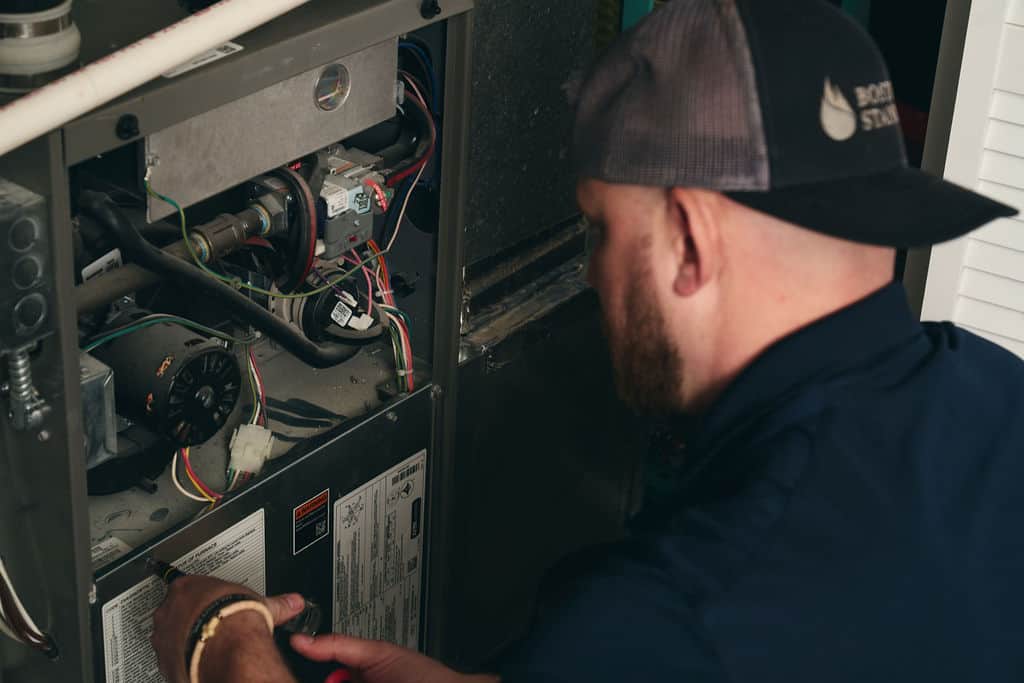
A dedicated furnace chimney liner also isolates combustion gases from damaged masonry walls. If mortar inside the chimney has decayed, toxic fumes could seep through the brickwork into upstairs living spaces. During professional furnace installation, our technicians inspect the existing venting layout to confirm whether a chimney specialist must line the flue before your new system fires up.
Why Boilers Demand Reliable Flue Performance
Steam and hydronic heating systems produce substantial heat, but older chimneys attached to them often show severe wear. Installing a chimney liner for boiler venting protects your property from the relentless condensation created during long heating cycles. In cold climates across New England, winter temperatures cool exterior chimney walls rapidly. When hot boiler exhaust contacts freezing masonry, moisture condenses almost immediately. A sealed stainless steel sleeve prevents this moisture from degrading the chimney structure.
When planning a boiler replacement, checking flue integrity is a non-negotiable step. If the flue is crumbling or oversized, pairing the new unit with a qualified chimney relining ensures dependable performance and safeguards your home.
Venting a Gas Water Heater Safely
Water heaters operate throughout all four seasons, including hot summer months when chimney draft is naturally sluggish. Outdoor temperatures in summer are closer to indoor temperatures, which reduces the buoyant pressure difference that draws exhaust upward. Adding a chimney liner for gas water heater venting helps maintain adequate draft velocity even when ambient atmospheric pressure works against natural venting.
The Orphaned Water Heater Problem and Modern Venting Solutions
In many homes across Greater Boston, a central heating appliance and a storage tank water heater share a single chimney flue. When both appliances run, the combined heat from the furnace or boiler and the water heater keeps the chimney warm enough to maintain an upward draft. Significant safety issues arise, however, when homeowners upgrade to high-efficiency equipment.
What Happens to an Orphaned Water Heater?
When you upgrade to a high-efficiency condensing heating system, the new appliance vents through dedicated plastic pipes directly out the sidewall of your home. This change removes the furnace or boiler exhaust from the masonry chimney entirely. The standard water heater is left venting alone into a chimney flue that was sized for two appliances.
Because the water heater’s small burner cannot generate enough heat to warm an oversized masonry column, exhaust gases stall. Toxic fumes and carbon monoxide often spill back into the basement through the draft hood. To solve this hazard, homeowners have two primary options:
- Have a chimney professional install a dedicated water heater chimney liner to reduce the flue diameter to the exact size required by the water heater.
- Replace the standing water heater with a direct-vent or power-vent unit that exhausts directly through an exterior wall.
Installing a chimney liner for hot water heater venting restores the proper draft diameter inside the existing chimney. If you are scheduling a water heater replacement, assessing the flue sizing is critical to keeping your household safe.
When Sidewall Venting Is the Better Alternative
Abandoning the chimney completely is often the simplest path forward. High-efficiency furnaces and boilers extract so much thermal energy that their exhaust temperatures are cool enough to safely vent through specialized PVC, CPVC, or polypropylene pipes.
Choosing sidewall direct-venting offers several practical advantages:
- Bypasses Deteriorated Masonry: If your chimney requires extensive structural repairs, routing vent pipes through a rim joist avoids a chimney rebuild entirely.
- Optimized Energy Performance: Modern direct-vent systems draw fresh combustion air from outdoors, which prevents your heating system from consuming heated indoor air.
- Space Flexibility: Switching to a sidewall-vented tankless water heater or condensing boiler frees up valuable basement space previously occupied by large chimneys and bulky equipment.
Many homeowners discover that switching to a high-efficiency heat pump or direct-vent system during their heating installation eliminates the need for chimney work altogether.
Ensuring Safe and Efficient Heating Venting
Heating equipment cannot be separated from the venting system that serves it. Connecting a new gas furnace, boiler, or water heater to an unlined or deteriorated chimney risks dangerous exhaust spillage, moisture damage to your home, and equipment shutdowns. Choosing a stainless steel chimney liner or transitioning to direct sidewall venting protects both your investment and your family.
Boston Standard prioritizes whole-home safety on every heating and hot water project across Eastern Massachusetts. Our licensed and experienced technicians inspect your complete flue setup during initial equipment evaluations. While Boston Standard does not install chimney liners directly, our team identifies venting hazards and coordinates with trusted chimney professionals whenever flue relining or masonry repair is required. Working together this way helps your new heating equipment run reliably, efficiently, and safely.
Schedule a Heating or Water Heater Assessment
Are you planning to upgrade your heating system or replace an aging water heater? Contact Boston Standard to schedule a comprehensive walkthrough of your home heating and venting setup. Our licensed professionals will evaluate your appliances, explain your venting options, and provide upfront pricing before any work begins.